Up-and-coming New Zealand author Karen Healey first caught my eye via her LiveJournal blog, the magnificently named Attention Rebellious Jezebels. One day, as a consciousness & self-esteem-raising exercise, she asked her readers to write in and explain why they were awesome. The resulting love-in made my day.
Turns out Karen herself is not short on awesome: a book-loving globe-trotting big sister of three who has spent several years in Japan, she has an M.A. (with a thesis investigating SuicideGirls.com's claim to be "empowering erotica"), and is currently completing a Ph.D. on contemporary superhero comics as fan-created text. At the University of Awesome.
And now she's an acclaimed YA author, whose first book, Guardian of the Dead, has just been named one of Kirkus Book Reviews' top novels for teens of 2010 -- and is a finalist for the American Library Association's prestigious Morris Award, which honours debut novels in the field of teen fiction.
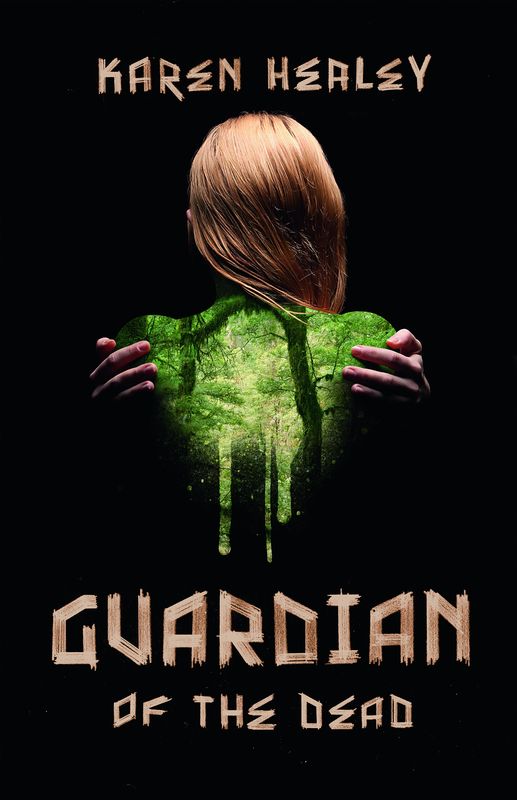
Guardian of the Dead is a funny, uncanny, terrifying adventure, featuring a kick-ass misfit heroine with unrealised powers, a gorgeous boy who's out of reach, a mysterious boy who's a bit mad, possibly bad, and certainly dangerous to know; and some enormously scary indigenous fairies. I'd describe the book as fantasy, but it's not that exactly. It's real world stuff -- school, drama club, parties and crushes -- sliced on the diagonal by a blade of sheer supernatural horror. The NZ edition, in particular, has a seriously lovely cover (and there's an interesting story behind it).
I've also had a sneak read of her equally exciting next book, The Shattering, which is set in a fictional town on the West Coast of the South Island where it's always summer. A trio of teens -- a straight-edge Samoan guy, a sexy rock chick, and a strong, androgynous Maori-Pakeha heroine -- set out to solve the mystery of a string of untimely deaths. In the process, they stumble across a big dark secret and a few small dark ones as well. (My e-mails to Karen while reading the typescript consisted of a series of variations on "Whoah, did NOT see that coming!").
I got my chance to meet the awesomeness in person this summer, when Karen was in New York for the US launch of her book. She trekked up to New Haven for lunch and a swim and some convoluted conversations with a pair of small boys who were pretty excited to meet a real live author, especially one with such great hair.* And then, some months later, we conducted a proper interview via e-mail.
Q. For starters, I adore your quick-and-dirty conversational book reviews. Ever chatted up your own book that way? Care to do so for my readers, in a not too spoilery fashion?
I have, actually, somewhere on the internet, but I've no idea where. So here we go.
BOOK: I'm, um, I'm about Maori mythology - and other mythologies - in a contemporary setting and I have a first person protagonist who-
ME: BORING. Why don't you let the characters speak for you?
BOOK: FINE. Characters, enter stage left.
ELLIE: Lalala, another dreary winter's day in dreary Christchurch at the boarding school my parents dumped me at while they toured the world, far from my Napier home. Luckily, I have a single but great friend in Kevin, who would never get me drunk and drag me into using my martial arts experience to choreograph the stagefighting for his university play with his other best friend, the way-too-perfect Iris!
KEVIN: Um, actually...
ELLIE: UGH. Okay. Lalala, another dreary morning walking to school and bumping into the silent loner upon whom I have a crush, which appears to have awakened my latent magical powers.
MARK: I'm gonna lie to you a lot and mindwipe you now.
ELLIE: What? I object!
MARK: Sorry, I'm too busy trying to save your best friend from a [spoiler redacted] to worry about some totally standard everyday mindwiping that made you spew.
ELLIE: That's going to cost you a punch in the face later.
MARK: I guess I'll be REALLY sorry then. Oh, by the way, now that we've [spoiler redacted], the whole North Island is in danger.
ELLIE: Not the North Island! All my stuff is there!
MARK: Maybe your punches will help?
ELLIE: No, for this I'm going to need some side kicks. Also, some ethics.
MARK: You're fascinating. Tell me more about this "ethics".
ELLIE: I will if we can make out.
MARK: [wahey, spoiler redacted!]
BOOK: They forgot about the desperate fight against powerful enemies! And Iris didn't get to say anything! And Kevin only got one line! And Professor Gribaldi wasn't mentioned at ALL. Also, there wasn't any discussion of the way the book handles variant mythologies in a multi-cultural society with a –
ME: Shhh! Make-outs!
Q. Ha, I'd say that's a pretty fair summary. So, the first part of the book is set firmly in Christchurch. Having lived there, I could (as with many of Margaret Mahy’s books) feel myself walking through the various locations. Or, in the case of one particularly spooky scene set in Dean’s Bush, cycling through it very extremely super fast while not looking behind me. This solidity of geographical specification seems unusual to me in YA fiction. Or is it?
Thank you! I worked pretty hard to make that part of the setting thoroughly Christchurchian - even the places I made up are as close as I could get to a Christchurch aesthetic. I have the feeling my version of Napier is a little less specific, since I've never lived there, but no one has complained yet.
I don't think it's that unusual in YA -- Holly Black's Tithe has a very tangible New Jersey, for example -- but it seems to stand out to people who have spent a lot of time in Christchurch. To me Christchurch is a very real space, and I wanted to ground the fantastical adventures in that sense of reality.
Q. I stand corrected on the question of location, having also just read (on your recommendation) the delightfully Christmas-themed Dash and Lily's Book of Dares, which could only have taken place in New York, and which is compulsory reading for anyone hankering to be sixteen, in love, in a bookshop, in NYC in a snowstorm, or any combination thereof.
Back to Guardian of the Dead: one American reviewer said “This isn’t a book that uses New Zealand as a backdrop; this is a book that couldn’t exist without New Zealand.” That’s incontrovertible, given the crucial role that Maori mythologies play in the plot. Two questions here: was there ever a moment where you considered not using that material? And were there times when that material was especially difficult -- or indeed productive -- for you?
Given that the book is, in a lot of ways, a story about how stories shape us and our land, there's no way I could have written Guardian of the Dead without drawing upon the first stories of the land. Actually, I'm not sure whether thinking about the mythologies or thinking about the theme came first, but they were both very early in the conceptualisation process.
The difficulty for me came in trying to ensure that my treatment was accurate and respectful; I grew up with these tales, like a lot of Kiwi kids, but these stories aren't my personal cultural heritage, and I needed to be careful for the sake of those for whom they are cultural property. I did a lot of research and had the benefit of several cultural consultants, but worrying that I'd screwed it up was a big concern. Especially since I knew the book was going to be sold in the US -- it's not like readers there have the resources young New Zealanders can access. For a lot of readers, it was the first time they'd ever encountered Maori mythology or a New Zealand setting in YA.
But it's enormously rich material. A lot of the myths, like Maui's quest to be claimed and recognised by his parents, or the story of Rangi and Papa's sons, or Hine-titama's conflict with her father-husband, are really strong family stories. I think stories of family conflict especially resonate with teen readers, and I found that really inspiring.
Q. You know, before reading Guardian of the Dead, I’d never thought of the patupaiarehe as having pre-dated any human arrivals. The notion of early Maori arriving to find a land already populated, albeit by supernatural creatures, is provocative and exciting. How did you stumble upon it?
I think I first read that notion in one of the stories Governor Grey collected and published. Those are often bowdlerised accounts made palatable to European tastes, rather than true translations, so they're not good sources in a lot of ways, but I thought the idea was pretty interesting. Or it might have been one of the other texts located on my *internet boyfriend*, the University of Victoria Library's New Zealand Electronic Text Collection!
One of the things I wanted to write about is how Aotearoa is an immigrant country -- even our first people have a strong immigrant history, with the iwi connection to their first waka -- and how subsequent clashes are mediated through story. So having pre-human settlers seemed an interesting slant on dealing with that.
Q. One of the main characters in Guardian of the Dead is in the process of coming out as asexual (and oops, I almost typed “asymmetrical” -- an instructive Freudian slip, given that asexuality is often misunderstood as a transitional state en route to a supposedly more definitive orientation). This struck me as deeply unusual in teen/YA fiction; if anything, the genre as a whole seems to be concerned with blossoming desire of one sort or another, and the troubles and excitement thereof. As you reveal, an asexual teen has a very different set of interpersonal challenges to negotiate when coming to sexual maturity amidst a bubbling cauldron of hormones, cultural norms, and familial expectations. Can you tell me more about where this part of the story came from?
Like a lot of parts of the story, the genesis was in me looking at a well-worn trope I didn't like much and wondering how I could screw with it -- in this case, the ideal of the lady in the tower, the damsel in distress. A lot of the time, her marker of goodness is that she resists sex, because she's chaste and virtuous (which are apparently the same thing) and then when the hero turns up to save her she's awarded to him. But she hasn't evinced any interest in sex! Why would she want sex with this guy? How totally unfair.
So I was noodling about this in the back of my head. I knew a little about asexuality; through friends and LGBTQ(A) ally interest rather than personal identity. I started thinking, what if the lady in the tower, the person who might need saving from a vile seducer, were actually asexual, rather than "chaste", and were acknowledged as such? And didn't want sex from the evil seducer, nor the heroic rescuer, and wasn't awarded to the latter? And, incidentally, what if she weren't a lily-white maid, but an athletic Maori teenage boy?
So I did research and talked to people and so on; again, it's the idea of trying to be as respectful and accurate as possible. Ace people aren't a monolith, of course, and there are plenty of different ways to be asexual, all of them valid. I really hope that Kevin isn't seen as reflecting all asexual teens, or a universal asexual experience, because that doesn't exist. But at the same time I wanted to hit a few points that are common for a lot of -- but not all -- asexual people. That unless they come out people will assume they're sexual, because it's just assumed people, and teenage boys in particular, are automatically sexual, that that's the norm. That once they do come out they often have to explain they're not gay (or sometimes, they are, but asexually so) or just going through a "stage". I mean, sexuality and sexual identity can be fluid for a lot of people, but no one ever says to a straight sexual person, "oh, maybe you're just going through a stage of being straight and sexually interested in the opposite gender. Maybe you'll be normal soon." That idea that straight sexual identity is "normal", instead of just "most common", it's insidious.
And so Kevin's asexuality tied into the story in a few ways, I think; as part of his characterisation, of course, but also in the ways the story deals with inheritance, and with magic, and how it connects to personality and how it can be resisted. Not all of that is explicit, but it's what I was thinking about while I wrote.
Q. Guardian of the Dead is narrated by Ellie, who is a classic teen fiction heroine in many ways: she's an outsider, smart, witty, observant, and possessed of hidden depths and unusual talents that will come in useful in the course of the book. Was writing from Ellie's point of view a deliberate choice, or just the way this particular story needed to be told? How did you go about finding her voice?
As you say, smart outsider teen heroines are common, for which I, as someone who was a smart outsider teen, am eternally grateful.
Writing from the point of view of an outsider has lots of advantages from a craft point of view; you get to have things explained to your protagonist without so much of the dreaded as-you-know-Bob exposition (which I still wasn't quite able to avoid). In terms of writing about cultural treasures in which you have no personal ownership, it's often a good choice to do so from an outsider's point of view; my inevitable errors can be Ellie's cluelessness, rather than errors that would be totally mystifying (and insulting) from someone who's supposed to be familiar with the culture in question.
I actually wrote a couple of early chapters in the third person, but first person narration entirely from Ellie's point of view seemed a better fit - I was able to narrow the focus down, and still reveal things to the reader of which Ellie wasn't aware, because of Mark's habit of wiping her memory from time to time. Not that ethical, but real handy for plot! Ellie's voice was always something that came easily.
My second novel, The Shattering, has three protagonists and three points of view - one is in the first person, and the other two are in the third person. That was a lot of fun, and more of a challenge when it came to creating three authentic voices. On the first run through the manuscript my editors noted that the two girls sounded too similar. I eventually abandoned feeling my way through what came naturally and made lists of lots of linguistic tics for all three of them - i.e., Sione never swears, Keri uses Kiwi slang, Janna uses American slang and run-on sentences - and obsessively combing through the manuscript to remove cross-pollination.
Q. Unlike writers who coyly protest that they never read reviews, not even the good ones, you not only happily read reviews of your work, but seem singularly relaxed about them. What’s the best positive line about your book that you’ve come across -- and the best negative line?
Hah! Yeah, I'm incurably curious, and I live on the internet, which would be a terrible combination for anyone trying to resist reading their reviews. So I don't even try. I'm not always singularly relaxed, but inflicting my occasional stiffness on the public wouldn't be terribly productive. I don't think anyone would be particularly interested by me scoffing at someone who just doesn't UNDERSTAND my work, my BRILLIANT BRILLIANT work with all its SUBTLE AMAZINGNESS. Even my friends aren't that interested, and they have to listen, cause I know where they live. Reviews aren't even about me, anyway; they're about the book, which isn't, and can't be, all things to all people.
I think my favourite positive line was the teen reviewer for VOYA, who said, "This captivating tale will have readers hiding under the covers with a trusty flashlight until they finish the last fascinating and heartfelt page." I was so flattered! Torch reading, excellent!
And my favourite negative line, which I will paraphrase, to prevent their being identified, was someone who protested that it felt as if I had included as many sexual orientations as possible, and they weren't even serving the plot (which presumably would have been more forgivable).
I found that hilarious, because I'd worried first that I hadn't accurately represented the actual diversity of New Zealand (one offscreen queer woman and an asexual boy in a large cast isn't that diverse!), and second that I'd made Kevin's asexuality too plot-relevant, that it might read as if he wasn't allowed to just BE asexual, but had to be so in order to serve the story. I mean, Bella Swan's sexuality is vastly important to the plot of Twilight, but no one says, "Well, clearly she was made straight on purpose, but it serves the plot, so that's okay". Invisible "normal" straightness, again!
Q. You write for young adults, although older adults who can remember being young will also find their way to your books, as should anyone who simply loves a jolly good story. From where I sit -- credentialled by the literary-academic establishment, and mostly a reviewer of Serious Adult Fiction for Serious Adults -- YA literature seems kind of the fierce but neglected younger sibling who just can't get no respect. Especially in the review pages of Big Important Papers and Magazines. And yet: Harry Potter! Twilight! Mockingjay! Percy Jackson! And my just-turned-9 year old is saving his pocket money so he can buy yet another boxed set of an interminable epic about warring clans of wild cats (incredibly wealthy wild cats, at this point)!
Which is to say, when the great publishing houses fall because Nobody Reads Anything That's Not on the Internet Any More, the printing presses will still be cranking out fictional fodder for the young and hungry, yes? And this is a good thing, yes?
I'm also credentialled by the literary-academic establishment, and like many writers, I read a lot, in varying genres. I am (of course!) biased, but I genuinely think that YA literature is at present producing some of the most original and certainly the most engaging stories available. I think a lot of the scorn YA authors see in established literary venues is based in ideals of high culture snobbery. It would be great to have our fiction assessed according to what styles and ideas are presented, what cultural work it actually does, rather than slinging it all into the general category of unworthy, juvenile fiction, beneath the notice or interest of the discerning reader. Other than the really big sellers, only a few shining examples, nearly always contemporary or "problem" novels, are picked out as somehow rising about their filthy genre.
I don't write YA because I'm not skilled enough to write adult literature, or because I think teenagers are a passive audience who will indiscriminately devour any old garbage. On the contrary, I think they are demanding, involved, canny readers. They won't keep going with something that's "improving" literature if they don't like it - they get enough of that in school. If a book doesn't entertain them in their leisure time, they'll toss it. The YA blogosphere is amazing. These young readers establish international book tours, run prize draws, and engage in social media in a lot of ways that more established review outlets have entirely ignored, to, I think, their detriment.
So yeah, it's annoying that YA is all but ignored in the major review outlets. I think a lot of adult readers are missing out on stuff they would really enjoy, although more and more of them are crossing over into the YA section, where they are very welcome. But, you know, we're doing our own thing. It would be nice to have the big names take more notice, but in the YA world, we don't really need them to get by. It's a bit like the situation with romance as a genre, which is routinely ignored or condemned by the literary-academic establishment, but is by far the largest slice of the English-reading consumer market at 13.2 percent. The printing presses will still produce YA! And that is indeed a good thing.
Q. I recently reviewed a book by a writer who has said "Nothing I write comes out of consideration for the reader" (in my rather cranky opinion, it showed). Do you have an Ideal Reader in mind when you write? Could you write without one?
My Ideal Reader while I'm actually writing is myself. I read a lot of YA, I know what I do and don't like, and I write, to the best of my ability, the story I want to read.
But after I've written, my Ideal Reader is everyone who reads the book and goes, "I liked this bit!" or "This bit made me think!" or "I didn't like what she did here, but I think she was trying to do this and I wish she'd done it this way instead." I pretty much appreciate every reader, but readers who take the time to think and communicate what they're thinking are just fantastic.
--
* Great hair, I tell you:
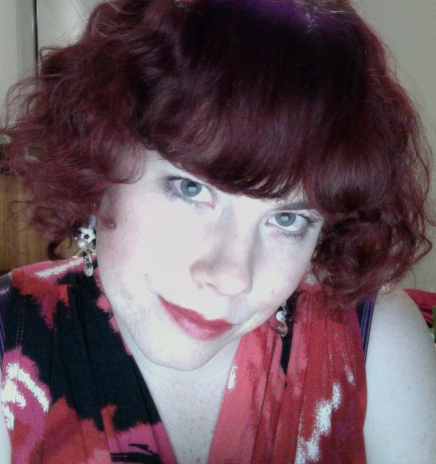
Image by Karen Healey
--
Karen Healey's Guardian of the Dead is currently on the shelves; The Shattering will be released in September 2011.