Posts by 81stcolumn

  • OnPoint: What Andrew Geddis Said, But…,

    Tried to figure why Ryall would fight this so hard and perhaps why Labour won’t be making too much noise.

    My suspicions rest with the growth in epidemic disability. In 2011 the number of cases of diabetes in New Zealand exceeded projections by more than 20% in some areas. The best case model would suggest that serious complications related to diabetes are set to double by about 2018. This means more than 10,000 extra people will require care within the next two electoral cycles. To put this into context the CDC estimate that soon 1 in 5 health dollars will be spent on diabetes treatment. Approximately 4% of those diagnosed with diabetes will suffer severe loss of vision and number of others will have to undergo some form of amputation. My point being is that diabetes along with associated morbidities disables people before they die. Current cost management and treatment models endeavour to transfer the cost of care to the community, to put it bluntly “patch ‘em up, train the family and send them home”. This cost model doesn’t work if you have to pay for home care, it certainly doesn’t work if these numbers start doubling over 5-6 years. Consequently the trivial $65m starts to escalate into a bigger problem without management, so I guess we get a legislative response to a political problem. Tax cuts vs. homecare anyone? The real killer at the bottom of this is that the Maori party voted for this; Maori/Pasifika outnumber Pakeha by approximately 3 to 1 in the diabetes statistics this will keep these communities in poverty for generations.

    Disclaimers;

    Did this in a hurry, I didn’t have time to check all my fag packet figures, I also used diabetes as an example without considering smoking, obesity and general inactivity, many of which will raise related issues.

    Nawthshaw • Since Nov 2006 • 666 posts Report Reply

  • OnPoint: Budget 2013: Bringing Down the…, in reply to BenWilson,

    Of course. I was using hyperbole.

    I figured as much but I thought I'd have a whinge anyway.

    I am serious about how quickly the postgraduate landscape has changed though. My partner (far smarter and more diligent than I) has been looking to re-enter academia for the last three years. At the moment she is in two part-time roles, neither of which look like they will eventuate in a tenured post. In one role she is effectively being paid part-time to train up a cheaper replacement for herself. With no growth in EFT's and what amounts to successive years of cuts in funding Universities will look to extend the exploitation of part-timers and graduate assistants in much the same way that the American institutions have done for the last twenty years or more. Current doctoral graduates are looking at a very bleak future unless something changes.

    Nawthshaw • Since Nov 2006 • 666 posts Report Reply

  • OnPoint: Budget 2013: Bringing Down the…, in reply to BenWilson,

    How long before a doctorate is really the bare minimum you need before you can be trusted with a cash till.

    Unlikely:

    i) The snobbery and misunderstanding around a doctorate will probably work against this in the long run. By way of a heuristic it was interesting to read here what value people did and did not find in a first class degree.

    ii) Who would pay for a qualification that requires an effective suspension of earnings for up to four years on top of Masters study and concludes with a debt that may not be much less than $100,000? The previous budget killed maintenance for higher study. Modern postgraduates don't earn enough at completion to mitigate this, if they can get a job at all. Consequently a substantial re-packaging of the whole system will be required for any intelligent person to want to try this. From an moral point of view I struggle to encourage anyone to pursue a qualification beyond Masters.

    iii) With major employers in areas like accountancy and law looking at running their own degrees it is a small step for a large employer to contract for vocational degrees with PTE's. The relationship between UNITEC and IBM has benefits but is also a little bit scary for a broad socially driven model of HE. Cast in this light equivalent funding for PTE's makes sense.

    Nawthshaw • Since Nov 2006 • 666 posts Report Reply

  • Capture: Autumn lite,

    Attachment

    I have ridden this route many times and yearned to take this shot (but better); A typical me shot that ended up looking like I'd instagramed it. Hit 82kph on the way down the hill and just made it to the car before dark.

    Nawthshaw • Since Nov 2006 • 666 posts Report Reply

  • Hard News: Satire's shooting star, in reply to Tim Michie,

    Which was up to a point what I was thinking. then I did a double-take; Is sexual abuse and or rape really a legitimate vehicle for making a satirical point about race?

    That's when I got a bit uncomfortable, that sort of ends means equivalence is easy when the concerned parties are unlikely to fight back. That point was missed altogether in most cases.

    Perhaps I'm being unreasonably sensitive here.

    Nawthshaw • Since Nov 2006 • 666 posts Report Reply

  • Hard News: Satire's shooting star,

    This is loosely connected under the banner "using satire in the media". I would be keen to know what others think of this piece in the Guardian.

    Nawthshaw • Since Nov 2006 • 666 posts Report Reply

  • Hard News: Competing for Auckland,

    I'd love to have had this Quimby for Mayor. Perhaps we could still vote in Tom & Jerry?

    #beenalongday

    Nawthshaw • Since Nov 2006 • 666 posts Report Reply

  • Hard News: Dressing for the Road,

    <chuckle> Sad I missed this earlier:

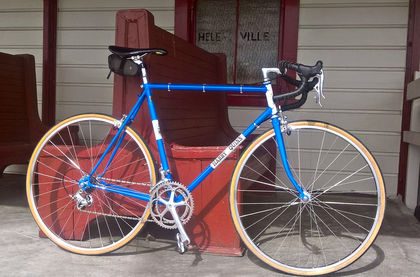
    I suspect I come from this at a rather different perspective. Despite marching quite gently towards my 50’s I still cover close to 7k a year and I don’t commute*. Indeed many of my miles are done out of urban areas. I will often drive out to Albany to start my Sunday ride. Peak week this year saw me cover just over 700km in a week (there that’s the p*ssing contest over for me). My garage contains seven bikes at the moment and will soon contain nine as I build a new commuter bike and the wee man gets started proper. Done my time as racer, tracky and courier (FWIW: my first exposure to PED’s was via rugby union…).

    These days I will tend to walk journeys less than 4km. Any distance on a bike for me is likely cause a soaking, so wicking synthetics are a no brainer (might try merino when I can afford it). I’m a bibs man through and through; the only trade shirt I own is Banesto so I guess there is some cred in them, just old, old cred. I prefer stuff like my much loved and over stretched Heinz Baked Beans shirt, cycling cut for a loooong back. For the distances I do, good fitting padded shorts are a must along with good gloves, shades and a comfy helmet. In my later years I have given in to the cult of chamois cream for longer rides.......

    When I did commute, I often wore cycle shorts under my work shorts/strides with something spare in my desk drawer. Underneath might be a helly tee topped with some form of windcheater and if it was a gilet I might wear arm warmers. I always clip in (would be real strange otherwise) look-type for “proper rides” and MTB (double sided spuds) to commute. I belong to a generation that chose to wear helmets (and all the better for it - I have pictures). Rain, cold or shine I’m seen in a set of fingerless Pearl Izumi gloves; the latest incarnation have lasted five years (quality is worth it where you can find it).

    So what have I learned?

    i) Wear what is comfortable and suited to your goals
    ii) Fashion is for fashion cycling is for life
    iii) Ride FFS ride wherever and whenever
    iv) Enjoy


    * Stopped commuting in Auckland due to anger issues - I came close to assaulting several people on my way to work……….long story.


    Footnotes:


    I will ride in cycling lanes – which is better than the pavement however I still feel like I have surrendered the road to the clowns (not terribly pragmatic but truthful). Lights and high viz are a really mixed bag. There is no substitute for the Gorilla test for understanding the difference between looking and seeing. In my professional opinion, there exists a trade-off between attention and estimation for lighting. Flash for attention and use more than one steady light if you want drivers to estimate distances effectively (not sure about two flashing lights).

    MAMIL as charged M'lord :-) and no I don't shave my legs (me too lazy - they too ugly).

    Nawthshaw • Since Nov 2006 • 666 posts Report Reply

  • Hard News: Thatcher, in reply to Lilith __,

    Taxes are an insurance premium ?? There’s a Thatcher legacy, right there.

    For info:

    National Insurance

    Nawthshaw • Since Nov 2006 • 666 posts Report Reply

  • Hard News: Thatcher,

    I don’t think I’m qualified to answer the question; could the Coal Industry have been saved? I do however a have a little insight into the survival of other industries. The assembly shop that I referred to belonged to a company that is still in business, still in private hands and until recently it was family owned. The company has a manufacturing base in the UK unlike many others with head offices in London and manufacturing wherever. As far as my limited understanding will allow, this company seems to have survived by not growing too quickly, not racing to raise shareholder capital and being measured with respect to overseas expansion/outsourcing. Moreover, even though I hated the work I remained fond of the company. I was treated well, offered overtime and allowed to learn from my mistakes. Such an approach is the product of good leadership as opposed to economics or straightforward management. My second cousin still owns Vollers corsets and I know how much they care for the people that work for them.

    It is tempting to suggest that the failings of greater British industry were inevitable or exclusively the responsibility of unions/workers. There were at the time some critical failures of leadership in the preceding period and an utter failure of vision. A strictly hierarchical model (as was common at the time) of leadership may be argued to be sustainable where wages compensate for a lack of ownership by and engagement with the workforce. Where wages were lower and more commitment was needed, some sense of ownership had to be extended to the workforce in lieu of hard cash. Cooperatives are one way of achieving this and they have strengths in that a clear line is drawn between the success of workers and the control of profits. But arguably other less extreme and indeed softer models of engagement may have been useful. Looking like you gave sh*t would have been a start in many cases – In the UK this was like talking to the taxman about poetry.

    On the other hand delivering weakened nationalised industries to privatisation undermined a whole chain of manufacturing. Related industries just didn’t have the time in which to diversify in order to avoid collapse alongside their shrinking partners. Many businesses just got bought and re-structured out of existence. With this went a lot of expertise nurtured in the 1970’s which is gone forever. It is worth remembering that Sheffield at the time of the closures was still one of the largest manufacturers of specialist steels in the world. So I guess part of the answer was in buying time for partners and some protections for recently rationalised industries. As I stated before, it is one thing to kick someone off the boat another altogether to do so without giving them a life-jacket. I suspect a lot of businesses gave up when they believed there was no hope and a lot of workers got very angry when they were left with no choices.

    Excuse me if this seems to naïve or misses the point.

    Nawthshaw • Since Nov 2006 • 666 posts Report Reply

Last ←Newer Page 1 2 3 4 5 67 Older→ First