Ads by Scoop

Winner - Best Blog - 2008 People's Choice NetGuide Web Awards

Made by...

Recent Posts...

PreviousPage 57 of 67Next   Archive

And some with a fountain pen | Nov 17, 2008 15:52

'Global economic crisis' is a mouthful. If one must use eight syllables every time one wishes to refer to the colossal mess we're in, one will grow weary.

None of the others are very much more concise. Current financial problems has seven. Worldwide credit crunch uses a snappy five, but it's a little tabloid.

We all know what we're talking about. This is afraid-of-the-dark for grownups. This is your most dreadful imaginings come alive.

Something so ghastly should have a name of its own.

A name gives a face to a thing. A single syllable employed to identity the problem leaves us more sentence room (we hope?) for a solution.

G20 leaders met today to discuss solutions to name.

Fears about the effects of name deepened today on news that unemployment has topped 18%.

What to call it? What name best captures the sense of it?

I have a suggestion. Some will rightly demur: Yes, he's been an imbecile, but this is the work of more than just a single one.

Nonetheless we are in this mess because we have have entirely ignored - or been blithely unaware of - the lessons of the 20th century. Not one single person seems more emblematic of the foolhardiness, the hubris, the casual disregard that has brought us to this sorry pass.

I propose we call it George.

View Printable Link to this Post Send Feedback to Author Discuss this Post (134 responses)


Unaccustomed as I am | Nov 17, 2008 10:15

I remember my maiden speech in parliament as if it were yesterday. Grown men wept. Even the parliamentary messengers looked up from their newspapers. By the next morning, I was the talk of Wellington. Leader writers rhapsodised. I was the face of a new generation, a leader in the making, the great hope of the nation. I was young, gifted and Slack.

Speech writers make shit up all the time. People only notice it when we say something ludicrously implausible.

But a good speech, one that makes people believe, well: that can be a thing of beauty, a moment of awe.

I speak now of the maiden speech and I address the nation's newest MPs.

Ladies and gentlemen, you are about to enter parliament. Your very first chance to shine will soon be upon you. After that, for quite a while, it may be no more than patsy lines at question time. Make the most of this moment.

Perhaps you've been quietly thinking: gee, it would be nice if I could sound like Barack Obama.

Let's be blunt: everyone wants to sound like Him; only He can pull it off.

But that doesn't mean you can't make yourself a much better orator. I offer you a short check list to put you on the right track.

1. Why are you here?

Complete this sentence: I came into politics because…..

Now: discard whatever you just wrote down, and try again.

You may have a stock answer you've been using for months or even years; we may well have heard it a thousand times before.

Don't settle for telling us what your party believes in, or repeating your stock phrase for the reporters; DIG. Try to recall a particular moment or event which has moulded your approach to life and politics; an injustice; a struggle; a revelation. A rip-off. A shock.

Tell us all about it. Show us the view of the world though your eyes.

Unless you are the very greyest of people, the most vacant-eyed of clones, there will be something about the way you look at the world that is new, and distinct.

Share that; we need fresh insights.

And so do you. Take your fresh insight and use it to guide your political career.


2. Disrobe
People lean forward in their chairs when you give them the unexpected.

We have many things on our minds that we keep to ourselves. Some should be kept there, but many others should not; we are the better for having them declared out loud.

Brave speakers embrace this idea.

Speak candidly, cut through the blandness.

Say what is in your heart. Be frank. Acknowledge the things you worry about in money, in work, in business, in relationships. Maybe you'll mention the coke you did in your thirties, maybe you won't mention the thing you have for high school uniforms.

What matters is that you acknowledge people as they are, and not as they represent themselves to be.

3. Thesaurus: not a small dinosaur

Barack Obama takes familiar ideas and commonplace observations and makes them fresh.

If you can produce just one line in your speech that sparkles enough to make the newspapers report it, you will have done well.

Write and rewrite, with Mark Twain's advice in mind:

The difference between the almost right word & the right word is really a large matter--it's the difference between the lightning bug and the lightning.

4. Tell a story

Management language is the curse of the modern world.

Management language loves to speak in the abstract.

You are here to share ideas, but not just in the abstract.

The best way to share ideas in a speech is to bring them to life with real people, real life, real stories.

How did Barack Obama describe the sweep of the 20th century? He told us the story of a 106 year old woman named Ann Nixon Cooper.

Tell us about the people you've met; the places you've been; the remarkable and dreadful things you have seen.

Take the stories of the people to the house of representatives and talk about the people you represent.


5. If you want to be Obama, do not try to be Obama.
The point of a speech is to achieve a connection.

They call Harvard Law graduates like Obama cool cats.

He speaks. The cool cat conveys his serene calm, his sure confidence, his perception and his empathy. The surely-crafted words buttress the style, and the style is buttressed by the truth of the words.

There is authenticity, and lyricism, and a connection between speaker and audience is made.

Make your character as evident as he makes his. You will be judged, as he has, by its content.

6. Arrive, and remain, realistic.

Winston Churchill was once asked, "Doesn't it thrill you to know that every time you make a speech, the hall is packed to overflowing?"

"It's quite flattering," he replied.

"But whenever I feel that way, I always remember that if instead of making a political speech I was being hanged, the crowd would be twice as big."

View Printable Link to this Post Send Feedback to Author Discuss this Post (45 responses)


The Art of the Deal | Nov 13, 2008 08:11

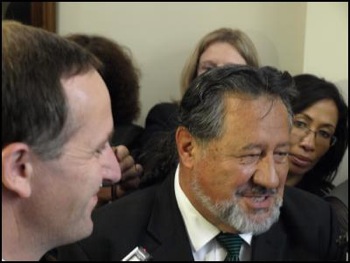
John and Pita

Corporate raider, investment writer and 'Minus Millionaire' Jim Slater reminisces:

I once did a deal with Tiny Rowlands about selling wattle in East Africa.

When we shook hands, Rowlands said, "By the way, what is wattle?"

To which I replied, "Where is East Africa?"

View Printable Link to this Post Send Feedback to Author Discuss this Post (87 responses)


Key and the 'nesians | Nov 12, 2008 08:49

Complete this sentence: The lesson of the Great Depression is…

This is a foolish question to ask. It has only been seven decades; far too soon to know. I left high school believing this to be true: FDR delivered America from the Depression; the Savage government put New Zealand back to work.

Yes, and no.

I have been waiting to hear some good rebuttal to those who say: "Press on and get it over with. Take the hit. All this indebtedness and printed money has created a phoney economy. It can't sustain itself. Kick out the props. Let the bankruptcies and implosions ensue, and then let's pick up and move on with a new bunch of winners and losers."

But what if you create a vortex of failure that pulls down ever more businesses and people?

Let us turn to this week's instalment from the man the libertarians and Friedmanites have been roundly mocking. They put his Nobel Prize in inverted commas; they say he's a problem, not a solution. All the same, I consider the price we might pay for vast economic convulsion and I think: can we have another look at Krugman's ideas?

He writes that the problem with FDR was not that he was Keynesian but that he was not Keynesian enough. It was that vast engine of state-funded economic activity, World War II, that finally got things rolling.

That said, F.D.R. did not, in fact, manage to engineer a full economic recovery during his first two terms. This failure is often cited as evidence against Keynesian economics, which says that increased public spending can get a stalled economy moving. But the definitive study of fiscal policy in the '30s, by the M.I.T. economist E. Cary Brown, reached a very different conclusion: fiscal stimulus was unsuccessful "not because it does not work, but because it was not tried."

...

And F.D.R. wasn't just reluctant to pursue an all-out fiscal expansion — he was eager to return to conservative budget principles. That eagerness almost destroyed his legacy. After winning a smashing election victory in 1936, the Roosevelt administration cut spending and raised taxes, precipitating an economic relapse that drove the unemployment rate back into double digits and led to a major defeat in the 1938 midterm elections.

What saved the economy, and the New Deal, was the enormous public works project known as World War II, which finally provided a fiscal stimulus adequate to the economy's needs.

This morning on the radio, Tony Alexander said that the lesson of the Great Depression was that a Government should loosen the purse strings. Hear, hear! Sooner the better. I endorse the words of Ben Gracewood in our forums on Monday:

Listen, it's mid-morning already and I can't see any sign of contractors laying fibre up my driveway.
What gives, National?

View Printable Link to this Post Send Feedback to Author Discuss this Post (140 responses)


Let's be Frank | Nov 11, 2008 06:53

You may recall the howls of derision in 2005.

How on earth can you be a minister and remain outside the government? they demanded.

That was then, this is now. This morning's paper tells me:

Mr Key acknowledged yesterday that he was wrong and "in hindsight" it had worked well.

I recently had the pleasure of hearing some of Frank Sargeson's old friends reminisce about his life and work. Frank would rise each day to craft a modest 300 words. 300 is not a large number. Frank did not have the benefit of a computer. Such marvellous machines they are. You can excise the wrong word in an instant; you can drop in new lines just as swiftly.

A busy journalist knows how to make the most of such a tool. Frequently-used phrases can be pasted into a story faster than you can say "auto correct".

We can surely expect certain lines to become very familiar in the medium term.

Insert name here acknowledged yesterday that he was wrong and "in hindsight" it had worked well.

Perhaps something from Mr Brownlee about our light bulbs? And, given the pressing need for our little nation to become better savers, would a "hindsight" reconsideration of KiwiSaver rates and the independence of the Superannuation Fund be too much to hope for?

View Printable Link to this Post Send Feedback to Author Discuss this Post (96 responses)


What I saw at the product launch | Nov 09, 2008 19:33

Eights and Aces

The arms went up like Rocky. He had pulled off his sweetest deal yet. Into the casino he rolled.

We do things differently here. We launch a new government in a gaming palace. While the rest of the world recoils in horror at the bleeding balance sheets, we tackle our financial Armageddon by giving the job to a merchant banker.

Down here at the end of the world we can't get enough of the dark humour.

I voted Labour Plus and all I got was this lousy tax cut

In their tens of thousands, brave New Zealanders yesterday put a tick next to National for the very first time in their life.

The only thing we have to fear is curly light bulbs said John.

"Fair enough," said the Labour Plus punters, "time for a change."

Buyers remorse? Not overnight. But it may happen. Check that fine print: what did he commit to, specifically? What will he do for you, specifically?

Stephen Joyce was making the right sounds on Agenda this morning. He knows the score. If you want to hold your market share, you have to fulfil the product promise. But can he persuade his fellow Tories? The casino rang with applause for Rodney and Roger.

He is risen!

He was red and croaking, all certitude and expectation.

Roger, like rust, like the P kids, like the undead, never sleeps.

Do you think he will be content to sit on a green leather seat for three years and do nothing? Gotta crash through or crash.

The Prime Minister could make him a minister. He could give give him a big job. Or he could do nothing, which would create a minister in exile. Ask Bassett to explain how it would work. Roger knows what to do. He knows how to keep the gallery enthralled with a new chapter in the soap opera that is Bradford's Parliament. There'd be press conferences, interviews, public meetings. He could have advice to offer; helpful suggestions: How to deal with the bad debts and the layoffs, the winding-ups and the bankruptcies. They're coming, don't you worry about that.

Ideology abhors a vacuum

But John said he'd be buggered if he'd have him in his cabinet. Can't they just ignore him? That rather depends on whether you want to pass any legislation. 59 seats will get you not one bill passed without the co-operation of at least three other members of Parliament.

Get the support of ACT, and you've made a start. If the legislation's not to their taste, you try Tariana. Make friends with the Greens and you may not be cooking with gas, but you have more options.

Last night John looked as happy as a dog with three tails. On Monday he's going to find out how it feels to have them all wagging him.

Roger, would you be interested in heading up a razor gang?

Some of my best friends are bureaucrats

The ironies don't take long to develop. Never mind tired old McCully and Ryall and Williamson and all. You can expect big things from Tim Groser and Hekia Parata. They are impressive, accomplished people. The only mystery is: how did they get past the selection process without anyone twigging that they have spent a large part of their lives working in the public service as other than doctors and teachers?

I have a dream job

The highlight of an election night is usually the winning leader's speech. I remember Lange, I remember Muldoon. I remember Bolger giving the pollsters some buggery. I remember Clark and I remember Mike Moore delivering what might have been a victory speech or a concession - no-one was quite sure - complaining about the temperature in the hall.

They all had their own manner, but I don't believe I have ever heard a New Zealand leader tread with quite such heavy-footed lumpishness through the glorious first minutes of their incumbency. The tone was odd. I wasn't sure if he was accepting the role of Prime Minister or celebrating beating the Thirsty Surfies in the Presidents' grade.

Still, let it not be said there was not colour. We've got great food, great scenery and Kiwi ingenuity. When you put it as poetically as that, who can doubt that we will soon be punching above our weight going forward?

Send in the clones

On the last day of the election campaign I drove past Nikki Kaye and her fellow campaigners outside Victoria Park market waving placards at the commuters as they drove to work.

It was emblematic. Where once an election involved campaign meetings and the exchange of ideas, wit and banter, we now have branding experiences and mall encounters.

I wonder: what would John A Lee have made of it all?

I have heard Nikki Kaye speak at meetings and on the radio. I have yet to hear her commit herself even once to a clear and unequivocal opinion.

Her words are the stuff of modern management. The sentences are embroidered with 'In terms of' and 'the reality is'.

She seems to proceed with the caution of the ambitious young executive who will not speak without clearance from head office, or in this case, campaign HQ. Modern companies are bottom heavy with biddable young twenty and thirty somethings. So too, it seems, is Parliament becoming the smart choice of the young man or woman with an MBA textbook on their bedside table.

The new MP for Auckland Central will no doubt be working on her maiden speech. I'd recommend she mention food, scenery and kiwi ingenuity.

View Printable Link to this Post Send Feedback to Author Discuss this Post (63 responses)


See Waiheke before you die. | Nov 06, 2008 08:53

It costs 32 dollars to ride the ferry to Waiheke Island and back. Even the best discount works out at 20 dollars or so, but this will be of no concern to you if you are more than 65 years old, and you're willing to leave after 9 am. In that case, the price to you will be: nothing. Gratis. Buckshee. Not one single dollar. Just take out your SuperGold Card and wave your way through the boarding gate.

All the age-enriched people we know are talking of it.

The SuperGold Card is bounteous. Free bus rides! 5% off your sirloin steak and your saveloys at the Mad Butcher! Other concessions too numerous to mention!

But never mind that; Waiheke for nothing! All of grey Auckland is going down to the sea today.

How much does a cargo of SuperGold Card-carrying seniors weigh? How much diesel will Fullers be burning up on this? And is it all at their cost? Or is it being worn entirely by ratepayers and or taxpayers?

Like the maxim about shoeshine boys giving stock tips, the sure sign that the end might be near for this marvellous perk came to me in a radio ad. Come visit Waiheke, said the ad. Use your SuperGold card and get a free ferry trip, and free buses when you get here! This is good news for the cafes of Onetangi, but possibly not good news for the future of this splendid treat.

For a long time, the best cheap treat in Auckland was the ham sandwiches at the museum. They were as fat as the ones you get in the United States of America; layer upon layer of succulent ham, almost too big for your gob. Some clown wrote it up in Metro and not long after, it seemed, they had remodelled the cafe, and the two dollar sandwiches with five dollars' worth of ham were no more. Good news for the Auckland museum's budget, and good news for the nation's pigs, but sad for the rest of us.

Who is responsible for the largesse? Winston will tell you it was his doing, and for once, he'll be telling you the whole truth. Go to a Helen Clark meeting, though, and you'll hear her taking her own due credit.

The truth is that it's you and me putting our hand in our pocket.

I can't say I begrudge it. It's a poor person who goes into a polling booth without thinking about other people's grannies, and other people's granddaughters.

This weird election seems to have come down to a reprise of the big issue of the 1975 Muldoon landslide. The Labour government had created a vast savings fund to vouchsafe the superannuation of the nation's elderly. To pay for it, money was compulsorily deducted from your pay and salted away in an investment fund, which stood to grow enormous. Muldoon offered a pay-as-you-go scheme that would give old people a pension that was almost as good as the average wage.

Decisions, decisions. Just to make it easier, a National Party TV ad showed the country turning blood red as the government bought up every last standing dairy, factory, farm and woolshed. Bring on the Dancing Cossacks.

A generation or so later, the notion of a government having a stonking big investment fund is now accepted by both major parties to be a Very Good Thing. But that nice Mr Key thinks it would be a good idea to dial back the amount people will have deducted from their wages. Hey, saving is hard, actually. So we'll change the scheme to make it less hard to save, by, er, not saving much. Good idea! I look forward to seeing this excellent approach being applied to next year's Auckland marathon, which will require that you complete only 10 kilometres. My record time will make those Kenyans look like pikers.

Muldoon's plan was short -term. So is Key's.

In the long run, we are all, sadly, inevitably and undeniably, dead; but we have a habit of leaving granddaughters.

In 1975, my granny said she had decided to vote for the nice Mr Muldoon because he was offering her a very good pension. That worked out very well for her, but not so well for her six great grand-daughters.

View Printable Link to this Post Send Feedback to Author Discuss this Post (56 responses)


Difficult to swallow | Nov 03, 2008 09:35

Poor Peter Dunne. Even his scandals sound dull. But wait! Just as your eyelids are falling, a certain pair of names make it all interesting.

On Saturday, The Dominion Post told us,

Mr Meurant, who had worked for Mr Vela, brokered donations to NZ First and later worked as an adviser to party leader Winston Peters.
While there, Mr Meurant offered Mr Vela the opportunity to help frame friendly policy in areas in which Mr Vela has business interests.
Mr Meurant wrote a report for Mr Vela at the end of September 1999 - two months out from the general election - in which he suggested donating $5000 to Mr Dunne's party.

I have been a fast fan of Ross Meurant since the winter of 1981. Everywhere you turned, politicians and protestors and Ces Blazey were just full of waffle and blah blah blah. Human rights blah blah. Amandla blah blah Mandela. Blah blah too busy dating my wife but a par thide is wrong.

Christ it was tedious. Waffle and wittering. But not from the leader of the Red Squad. Move Move Move he said. How true.

How I yearned for such a strongman to enter politics. My wish came true on May 20 1987. The national party met in Daragaville and chose Ross Meurant as their candidate. I was so giddy with the thought of it that I had to leave the town in an ambulance.

Naturally he was far too good for those gutless wonders in Parliament. He did some undersecretary work, but before long he walked, and that was the end of a short but brilliant career.

He wrote a book. The ending was without parallel. Quite the best I've ever read.

He recalled how the Italians had finally turned on Mussolini by stringing him up by his feet, hanging him from a steel girder and stuffing his mouth with his testicles. "Keep your eye out for a spare steel girder," he concluded cryptically.

If I were the Velas, belting about the country in a sleek, swift helicopter, I daresay I could be picky about my political friends. I could go for the very best money could buy. I could hook up with a straight talker who wouldn't put me crook.

If you want to get amongst the politicians, you need to know how to take care of yourself. You don't want to end up with anyone's testicles stuffed in your mouth.

View Printable Link to this Post Send Feedback to Author Discuss this Post (17 responses)


PreviousPage 57 of 67Next   Archive